The Whirly JournalKids & Family
Why Balance Training Matters for Kids with ADHD: An OT Mom's Guide to Progressive Balance
An occupational therapist and mom of two boys with ADHD explains what the research says about balance training for kids with ADHD, and how to build a simple, progressive balance board routine at home.
8 min read
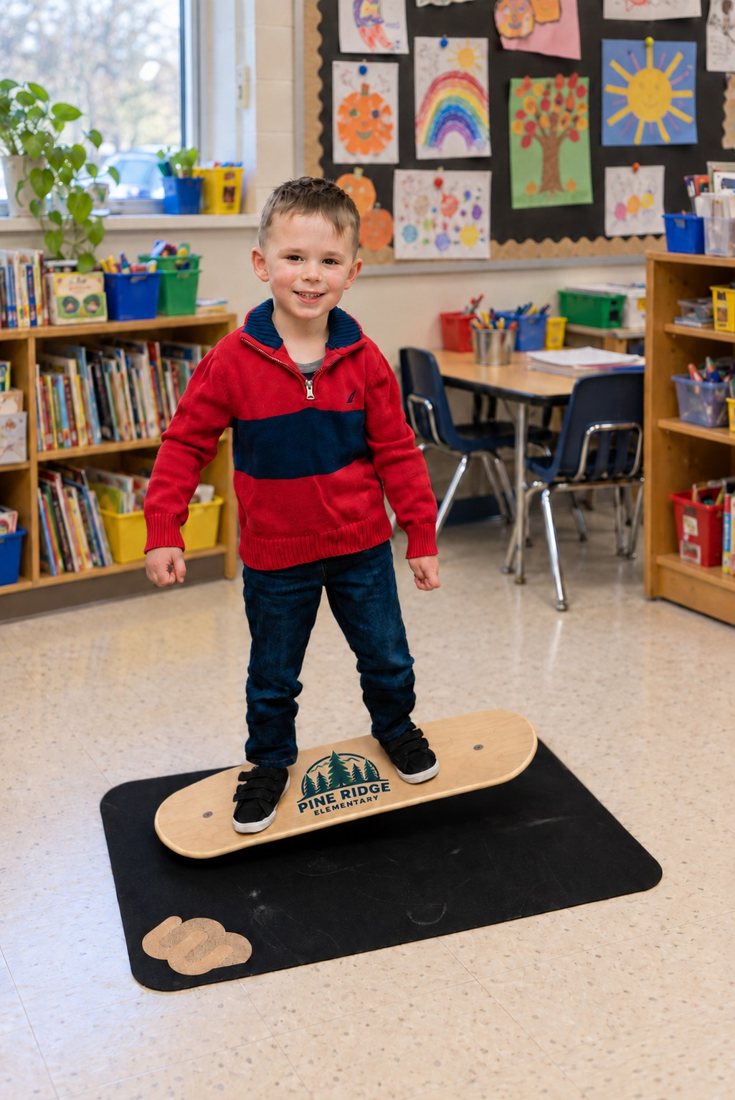
If your child has ADHD, you've probably heard "sit still" more times than you can count. From teachers, from coaches, maybe even from yourself. I've said it too.
I'm an occupational therapist and a mom to two boys with ADHD, and one of them is also a sensory seeker. What I've learned, from the research and from my own living room, is that our kids' bodies and brains are deeply connected. Sometimes the best way to support your child's brain is through their body.
One of the simplest ways to do that? Balance.
The ADHD and balance connection
Researchers have noticed for years that many kids with ADHD struggle with balance and coordination. In a 2024 study published in the European Journal of Paediatric Neurology, 65% of children with ADHD showed an underactive vestibular system (the inner ear balance system), compared with 0% of children without ADHD. Problems with balance itself showed up in 42% of the kids with ADHD and none of the others.
Why would balance and attention be linked? A big part of the answer is the cerebellum, the part of the brain that coordinates balance and movement. The cerebellum doesn't just keep us upright. It's connected to the brain networks involved in attention, timing, and self-control, and researchers have pointed to differences in these cerebellar networks in ADHD.
That's exactly why balance work is so interesting for our kids. When your child practices balance, they're exercising a part of the brain that also plays a role in focus and regulation.
What the research says about balance training for ADHD
The study I come back to most was published in 2025 in the journal Psychology of Exceptional Individuals. Forty children with ADHD, ages 9 to 12, were split into two groups. Half did 20 sessions of game-based training built around balance and movement: walking on a line, standing on one leg, hopping, stepping on foam pads, and tossing balls. The other half did no training.
Compared with the kids who didn't train, the children who did the balance and movement training showed:
- Better emotional regulation, with fewer emotional ups and downs
- Better sustained attention, meaning they could stay focused longer
- Fewer impulsive responses on an attention test (acting before thinking)
- Faster, more accurate responses
It was a small study and didn't follow the kids long term, but it lines up with a growing body of research on balance and ADHD:
- Balance and postural control: Children with ADHD who did balance training three times a week for seven weeks significantly improved both their static (still) and dynamic (moving) balance. Kids in the control group didn't change. (Moradi et al., 2020)
- Sustained attention: Boys ages 7 to 10 with ADHD improved their ability to stay focused after eight weeks of balance exercises. (Arabi et al.)
- Selective attention: Six-year-olds with ADHD who did balance training got better at tuning out distractions. (Dana & Rezaei, 2022)
- Impulse control and working memory: When balance was paired with a thinking task, kids with ADHD improved in working memory, flexible thinking, and impulse control, and had fewer ADHD symptoms at home and at school. (Nejati, 2021)
- Attention in the classroom: In a randomized trial at Peking University, kids with ADHD who added balance training to their medication had better teacher-rated attention and behavior than kids on medication alone. (Feng et al., 2021)
- Emotional control: Even in young children without an ADHD diagnosis, a 2025 randomized trial found that four weeks of balance training improved emotional control more than the regular preschool curriculum. (Chounchay et al., 2025)
Most of these studies are small, and balance training isn't a replacement for your child's doctor, therapist, or ADHD treatment plan. But they all point in the same direction: when kids with ADHD practice balance, more than their balance improves.
What a balance board actually does for an ADHD brain and body
Here's how I explain it from an OT perspective.
It feeds the vestibular system. The inner ear tells the brain where the head and body are in space. It also helps set your child's "engine," meaning how alert or calm they feel. Slow, rhythmic rocking tends to calm the nervous system. Quicker, more varied movement tends to wake it up. A balance board can give your child both.
It builds body awareness. Every wobble sends information from the feet, ankles, knees, and hips up to the brain (this is called proprioception). Kids with stronger body awareness tend to bump, crash, and spill less, and they often feel more settled in their bodies.
It strengthens postural control and core stability. If your child's core is weak, just sitting upright takes work. You'll see slumping, leaning on the table, legs wrapped around the chair, or popping up every few minutes. Energy spent holding the body up is energy that isn't available for focus. A stronger core gives your child a stable base for attention, handwriting, and sitting through dinner.
It improves coordination. Balance asks both sides of the body to work together and plan movements ahead of time. Those same motor planning skills show up in sports, getting dressed, and following multi-step directions.
It practices emotional regulation. On a balance board, your child loses their balance, recovers, and tries again, over and over. That's frustration tolerance in action. Their nervous system learns that a wobble isn't a disaster.
It practices impulse control. You can't rush a balance board. Your child has to slow down, notice what their body is doing, and make small, controlled adjustments. That pause-and-adjust is a skill our ADHD kids need everywhere.
Why progressive balance matters
In OT, we talk about the "just-right challenge." If an activity is too easy, the brain stops adapting. If it's too hard, kids get frustrated and quit (and often melt down). The brain grows at the edge of what a child can do.
That's why a progressive balance board matters. As your child's balance improves, the challenge has to grow with them, or the benefits level off.
How much, and how often?
In the research, balance programs usually ran two to four times a week for about seven to eight weeks, with sessions lasting 30 to 60 minutes including warm-up. I'm not aware of a study that tested a specific daily dose like 10 minutes a day.
At home, I aim for 10 to 15 minutes every day. Here's my OT reasoning: skills are built through frequent repetition, short sessions fit an ADHD attention span, and daily practice is easier to stick with than one long session a week. You can even split it up, with 5 minutes before school and 5 to 10 minutes before homework.
Consistency matters more than length. A few minutes on most days beats one long session your child dreads.
Using the balance board during homework
In a 2015 study in the Journal of Abnormal Child Psychology, boys with ADHD did better on working memory tasks when they moved more. Kids without ADHD actually did a little worse when they moved. For many children with ADHD, movement may be part of how their brain stays switched on.
My rule of thumb at home:
- Handwriting practice: Sitting with feet flat on the floor. A stable base helps with neat letters.
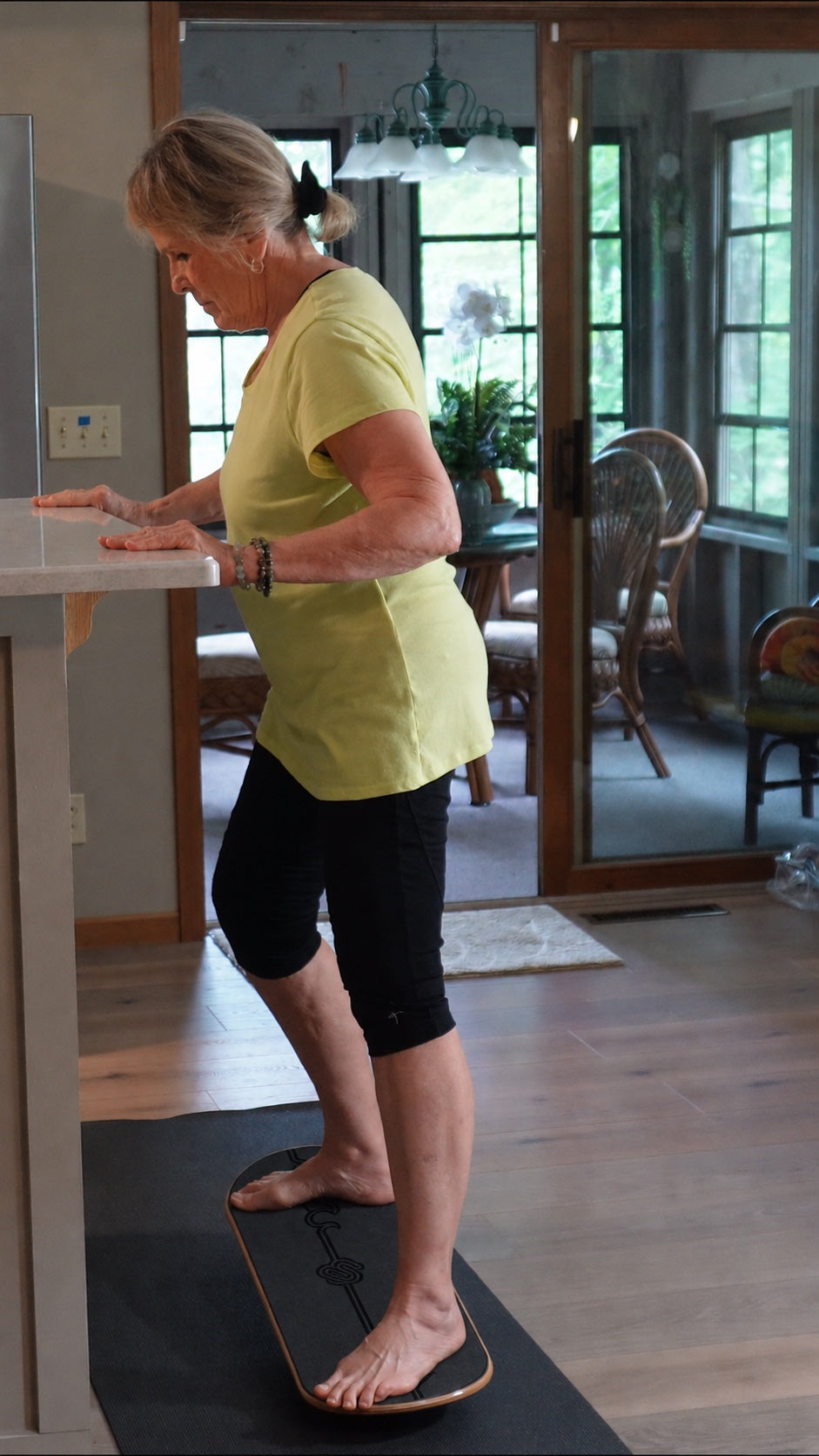
- Thinking homework (math facts, spelling, reading, studying for a test): Let them stand on the board at the counter. Resting their forearms on the counter gives their arms stability for writing while their legs keep moving.
Why we chose the Whirly Complete
I'll be honest: my two boys are rough on everything. Toys, furniture, equipment, you name it. I'd been looking for a balance board that would grow with them and not break, something I could buy once and not replace a year later.
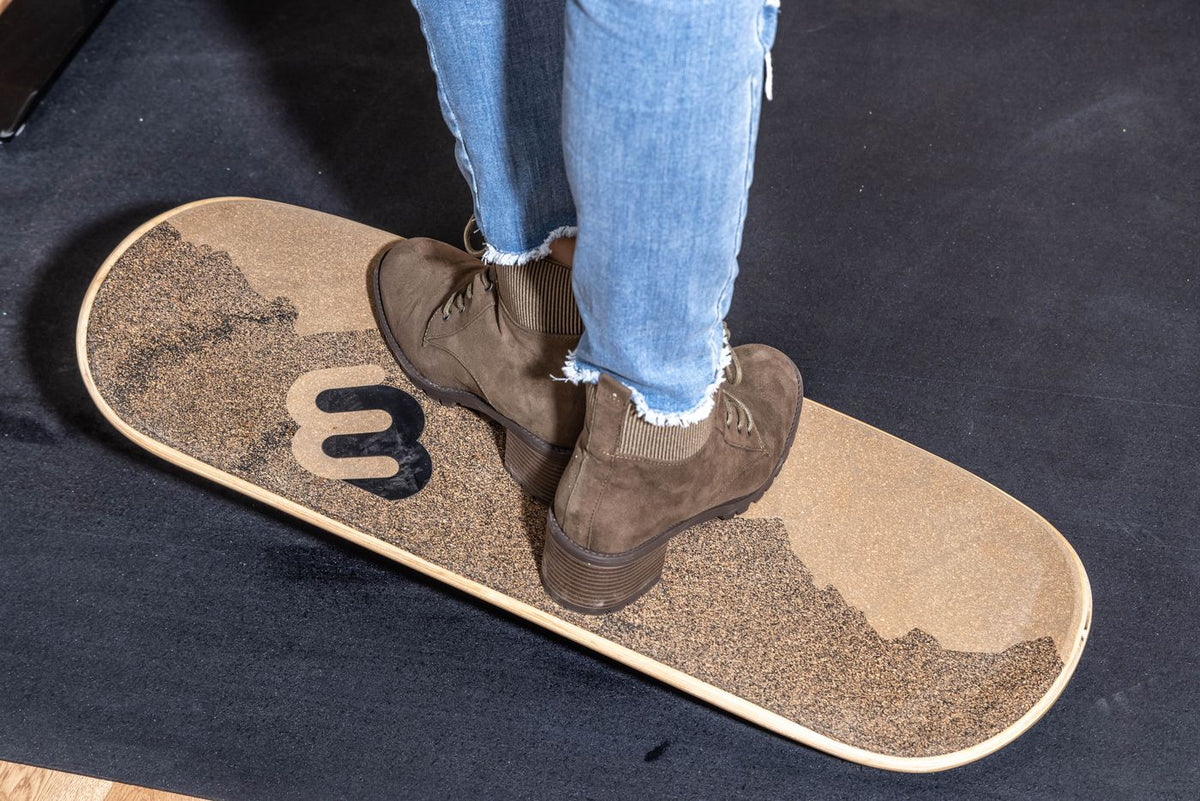
The Whirly Complete grows through five levels in one board. Your child starts on the most stable setup for steady rocking, and as their balance improves, you switch the base to add more challenge, all the way up to the Roller for surf-style balance. That's the just-right challenge built right into one board.
It's hand-assembled in the USA, it's sturdy and well made, and it comes with a lifetime warranty. My boys hop on it before homework and during movement breaks, and they love challenging each other to try the next level. To them, it's a toy. To me, every wobble is training their body and their brain.

Balance board exercises for kids with ADHD: a simple progression
Level 1: Steady. On the most stable setup, rock slowly side to side. Then try holding still for 10 seconds. Add a few mini squats.
Level 2: Add a wobble. Move to a setup with more motion. Rock front to back and side to side while keeping eyes on a target on the wall.
Level 3: Add a thinking task. This is where the research gets exciting. While balancing, have your child catch and toss a beanbag, say the ABCs, skip count, or spell their spelling words.
Level 4: More directions. Tilt in every direction, try slow quarter turns, or balance with eyes closed for a few seconds (with you close by).
Level 5: The Roller. Surf-style balance for kids who are ready. Start with a wall or counter for support and an adult nearby.
A few safety tips:
- Start on the most stable setup, even if your child insists they're ready for more.
- Clear the space and use a mat or carpet.
- Keep a wall or counter within reach, and supervise younger kids.
- Stop if your child feels dizzy or overwhelmed.
Looking for more ways to get the whole family moving? See our balance boards for kids.
The bottom line
Our kids aren't trying to be difficult. Often their bodies are asking for the input their brains need. Daily, progressive balance practice is a simple, fun way to give it to them, and the research suggests the benefits can reach well beyond the board: focus, attention, emotional regulation, and impulse control.
Disclosure: Lindsey is a Whirly Board affiliate partner. This post is for educational purposes and is not medical advice. Talk with your child's doctor or occupational therapist about your child's specific needs.
References
- Gur-Hartman T, Tarrasch R, Zerem A, et al. (2024). Consequences of vestibular hypofunction in children with ADHD/DCD. European Journal of Paediatric Neurology, 52, 1–9.
- Yaghoobi A, Roshanaei MR, Ghorbany Z, Yarmohamadi Vasel Sh. (2025). The effect of cerebellar training method on emotion regulation and attention maintenance in children with attention deficit-hyperactivity disorder. Psychology of Exceptional Individuals, 15(59), 133–162.
- Moradi J, Jalali S, Bucci MP. (2020). Effects of balance training on postural control of children with attention deficit/hyperactivity disorder. Iranian Journal of Pediatrics, 30(4), e95542.
- Arabi M, Saberi A, Mirhosseini M. The effect of balance exercises on the sustained attention in boys 7–10 years with attention deficit/hyperactivity disorder (ADHD) in Kerman.
- Dana A, Rezaei R. (2022). The effectiveness of balance training on static balance and selective attention of children with attention deficit/hyperactivity disorder. Shenakht Journal of Psychology and Psychiatry, 9(1), 151–163.
- Nejati V. (2021). Balance-based Attentive Rehabilitation of Attention Networks (BARAN) improves executive functions and ameliorates behavioral symptoms in children with ADHD. Complementary Therapies in Medicine, 60, 102759.
- Feng L, Ren Y, Cheng J, Wang Y. (2021). Balance training as an adjunct to methylphenidate: A randomized controlled pilot study of behavioral improvement among children with ADHD in China. Frontiers in Psychiatry, 11, 552174.
- Chounchay S, Assapun J, Ngowtrakul B, Saenphan W. (2025). Effects of 4-week balance training program on executive function in preschool children: A randomized controlled trial. Archives of Allied Health Sciences, 37(3), 103–117.
- Sarver DE, Rapport MD, Kofler MJ, Raiker JS, Friedman LM. (2015). Hyperactivity in attention-deficit/hyperactivity disorder (ADHD): Impairing deficit or compensatory behavior? Journal of Abnormal Child Psychology, 43(7), 1219–1232.