
The Whirly JournalStanding Desk
You Bought a Standing Desk. Now What?
Bought a standing desk? Learn how to alternate sitting, standing and movement, and add short Whirly Board breaks to your workday.
3 min read
The desk is assembled. The monitor is adjusted. You press the button, rise to standing height, and feel like you’ve upgraded your entire workday.
Then you spend the next three hours standing in almost the same position.
A standing desk gives you options. Getting more from it means using those options throughout the day, including taking time to move.
How long should you stand at a standing desk?
There’s no single sitting-to-standing ratio in the research discussed here that fits every person and task. A practical starting approach is to alternate comfortable periods of sitting and standing, add short movement breaks, and change position before discomfort builds.
If standing is new to you, begin with short periods and see how you feel. You can sit for focused writing, stand for a short call, and take a movement break when the task ends.
Your routine should be easy enough to repeat on a busy day.
Is standing all day bad for you?
Long, stationary stretches can become uncomfortable, and research gives us reason to pay attention to total standing time.
A 2024 observational study followed 83,013 UK adults using device-measured activity data. More standing time was not associated with lower major cardiovascular disease risk. Standing beyond roughly two hours per day was associated with a higher incidence of orthostatic circulatory conditions, which affect circulation while upright. Sitting for more than ten hours daily was also associated with higher cardiovascular and orthostatic risk. These are population-level associations, rather than a prescribed desk schedule. Read the study.
In plain language, this study tracked links between everyday habits and health outcomes. It did not test a standing desk or establish a two-hour limit for everyone.
The findings support looking beyond the number of hours your desk stays raised. Think about how often you change position and what movement you include.
Give your muscles something to do
Walking breaks have been studied directly. In one controlled experiment, interrupting sitting with two minutes of light- or moderate-intensity walking every 20 minutes lowered after-meal glucose and insulin responses in 19 adults aged 45 to 65 with overweight or obesity. These were short-term responses during the experiment, not proof of long-term prevention. Read the study.
That gives walking a clear place in a desk routine. Take a lap after a meeting, walk to refill your water, or add a short walk after lunch.
You can also use breaks to practice another skill, such as balance.
Add a Whirly Board to your standing time
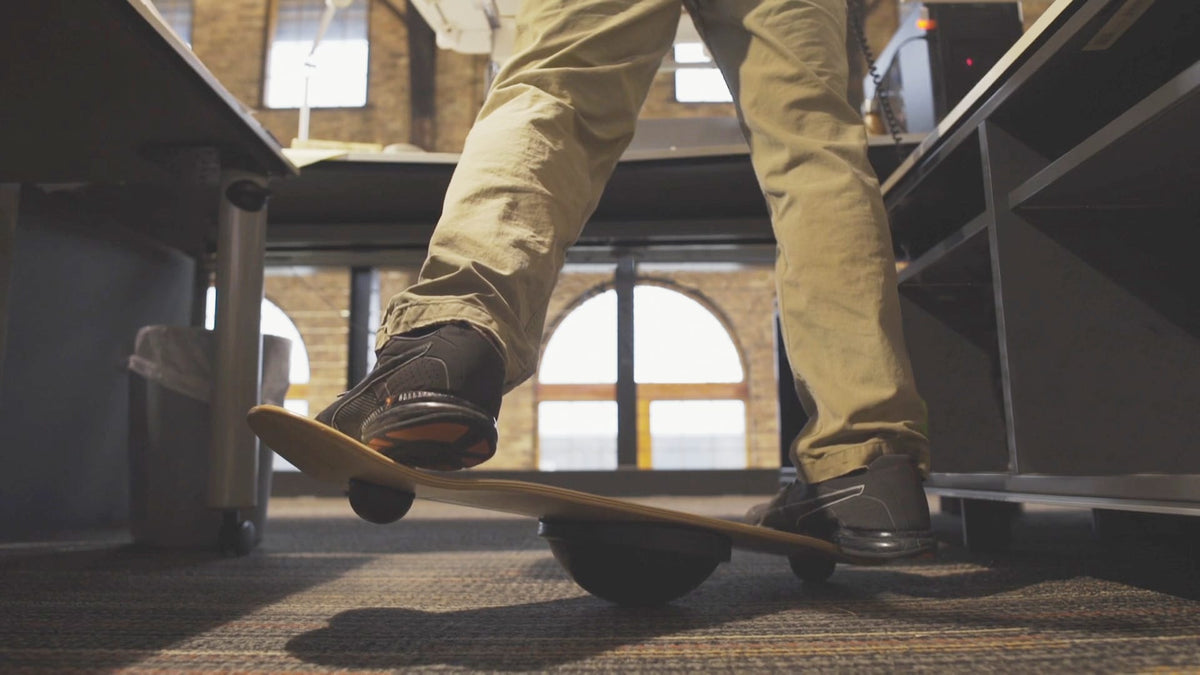
Whirly Board gives your standing setup a surface that moves in multiple directions. Small weight shifts ask you to coordinate your movements and control the deck.
Begin by getting comfortable with your board away from demanding work tasks. Once those movements feel familiar, you can explore gentle shifts during a short call or use the board for a dedicated break beside your desk.
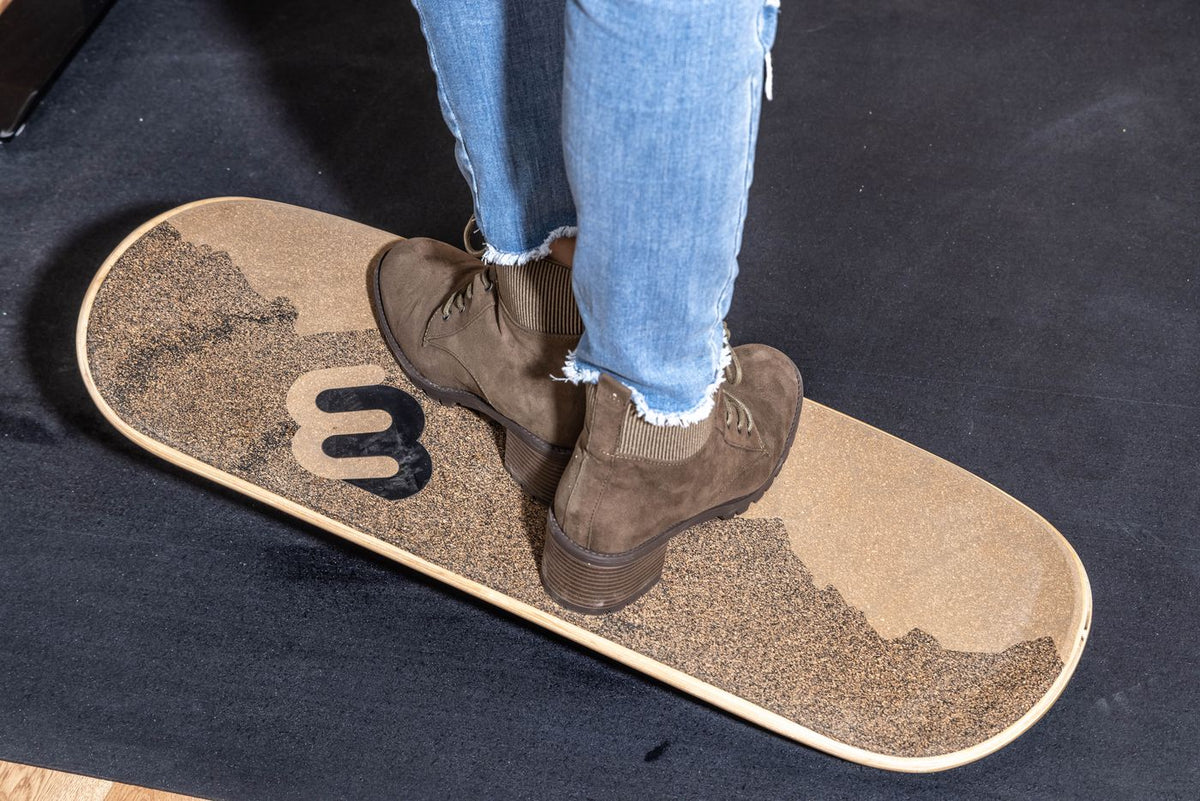
For a focused movement break, try slow side-to-side shifts, forward-and-back shifts, and a familiar sequence of reaches or shallow squats. The Whirly Desk Rider’s wider deck is designed for standing-desk use, while Whirly Complete offers different progression options.
The board adds balance practice to your day. Keep walks and other exercise in the mix, too.
Build a routine around your tasks
Try choosing positions according to what you’re doing.
- Sit comfortably for a detailed writing or spreadsheet task.
- Raise the desk for a short call or reading session.
- Step away for a walk when the task ends.
- Take a brief Whirly Board session between work blocks.
- Return to whichever position feels comfortable for the next task.
This is a flexible example you can adapt. You can use a timer if you tend to lose track of time, or let familiar transitions remind you.
Start with your next work break
You already have a desk that changes height. Give yourself permission to change with it.
Try one short standing period, one walk, and one movement break during your next work session. Notice what fits your attention, comfort, and workload, then build a routine you can keep.
Explore the Whirly Desk Rider for your workday.
Choose a setup and movements appropriate for your ability. Ask your healthcare professional for individualized guidance if you have persistent symptoms or a condition affecting standing or balance.