The Whirly JournalStanding Desk
Balance Snacks: 2-Minute Movement Breaks for Your Standing Desk
Explore the movement-break research, watch three Whirly Board demonstrations, and make short breaks part of your workday.
3 min read
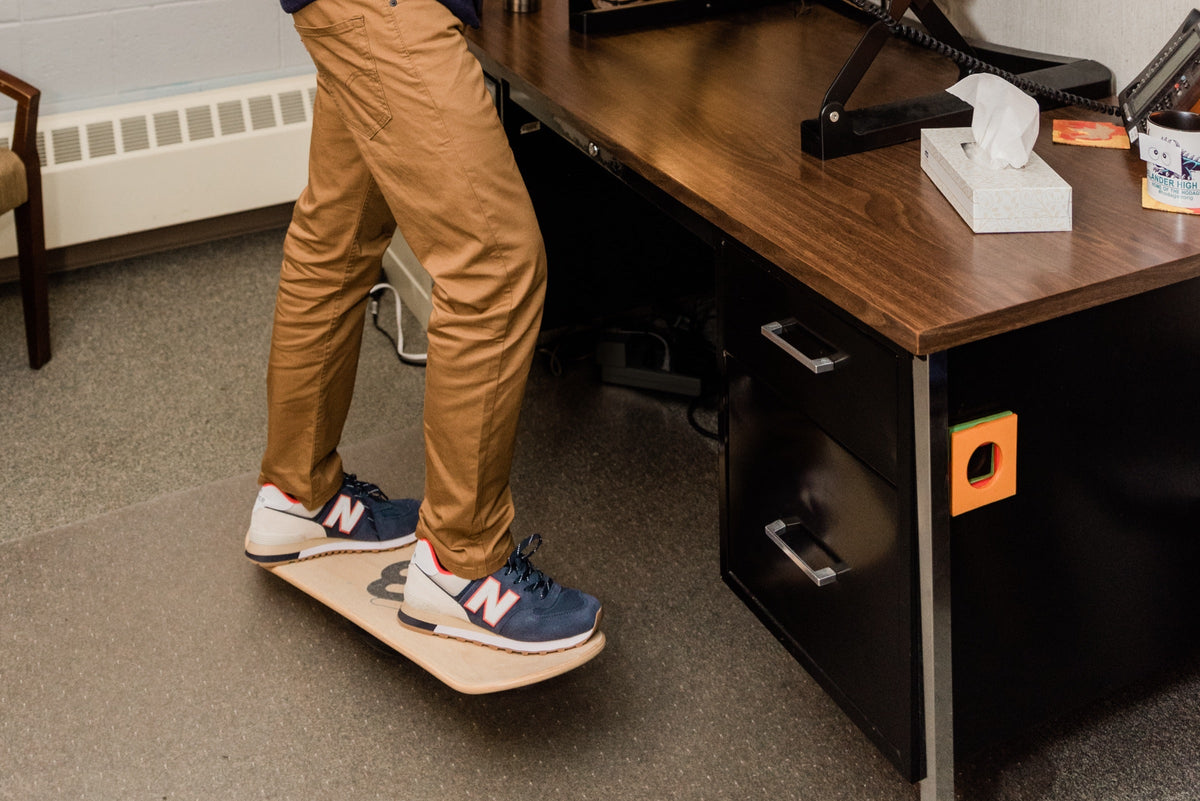
A Balance Snack is a short movement break that brings balance practice into your day. The purpose is simple: interrupt long stretches at your desk and give your muscles something to do. Studies in adults have found that short walking and simple resistance breaks can lower the blood-sugar response after meals. The research below explains who was studied and which movements they tried. The habit is making room for movement throughout the day.
Listening to Science Vs and Science Friday got me thinking about movement with my board differently. I already had a way to move right there. What if I used it as a reminder to take little movement breaks throughout my day? That's the idea behind a Balance Snack.
Watch the moves: a two-minute movement break
Step away from your screen, give yourself room, and try these three moves. Spend roughly 40 seconds on each, including transitions. Use a pace and range you can control; if a board move is beyond your current balance, take a walking break instead.
1. Rocking in place
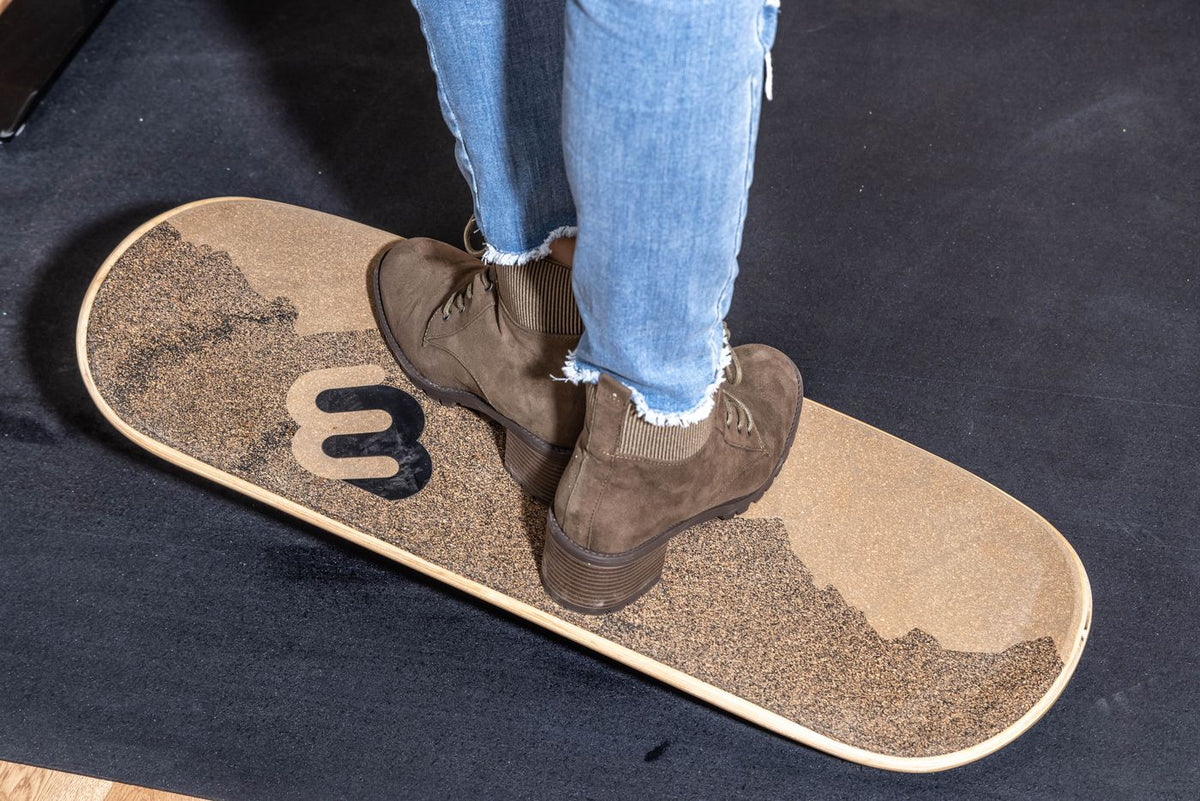
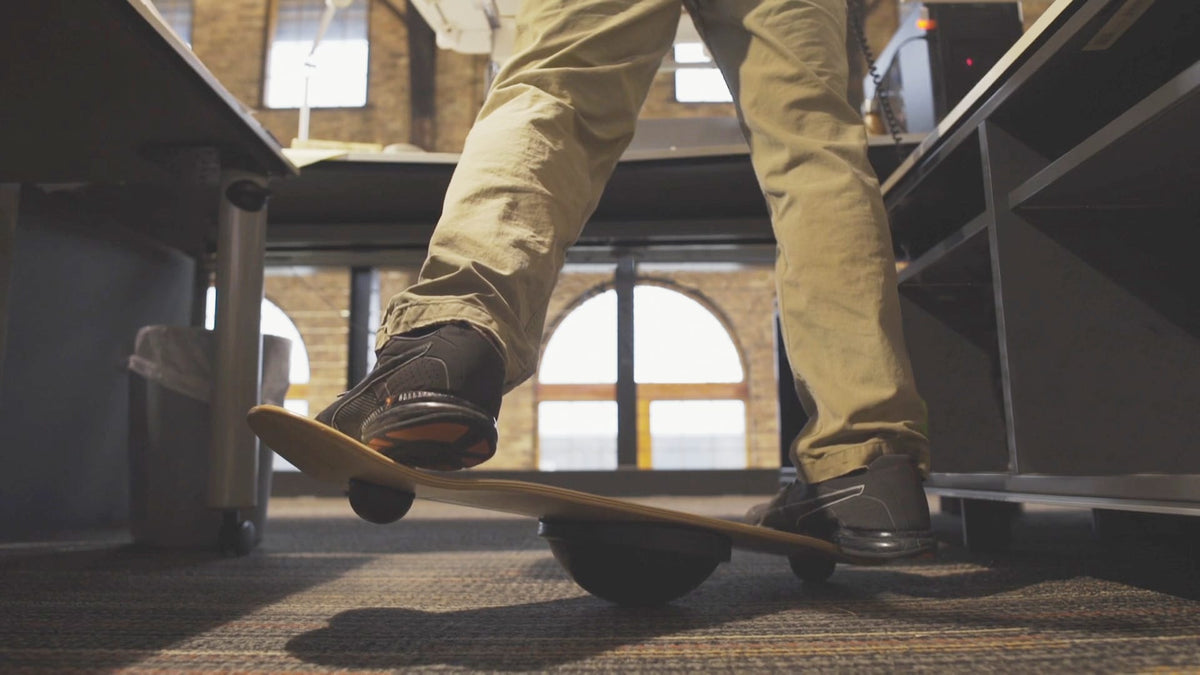
Both feet on the board. Rock gently from one end ball to the other and find an easy rhythm. Watch the rocking demo.
2. Balance squats
Sit your hips back, bend your knees, then stand tall. Settle the board between reps. Depth can come later. Watch the squat demo.
3. Half Jacks
Keep one foot centered on the board while the other taps out and back and your arms rise. Switch sides halfway through. Watch the Half Jacks demo.
That's one movement break. Explore the exercise library when you want a different combination.
What the research says
- Two minutes can matter. In a small trial of 19 adults with overweight or obesity, two-minute walks every 20 minutes lowered post-meal glucose and insulin responses compared with uninterrupted sitting. That means a smaller blood-sugar rise after eating. Dunstan et al., 2012.
- Simple resistance moves count, too. In a trial of 24 inactive adults with overweight or obesity and type 2 diabetes, three minutes of half-squats, calf raises, glute squeezes and knee raises every 30 minutes lowered post-meal glucose and insulin responses compared with uninterrupted sitting during the test day. The exercises were done without a balance board. Dempsey et al., 2016.
- Walking breaks may help how you feel, too. In the 2026 study discussed on Science Friday, 11,484 people started a two-week walking-break program. Participants reported better mood and less fatigue; five-minute hourly breaks offered a practical tradeoff between benefit and feasibility. People chose their schedules and reported their own outcomes, so this wasn't a randomized test. Diaz et al., 2026.
- The evidence keeps growing. Science Vs cites a 2026 review by Gale and colleagues examining activity-break timing. An additional October 2026 review by Meng and colleagues, covering 72 trials, found frequent activity breaks had the most favorable short-term effects on glucose and insulin. It did not find a significant improvement in triglycerides, another type of fat measured in blood.
These findings support breaking up sitting. They don't establish that this two-minute board routine produces the same results as the studied walking or resistance breaks. Our routine is a practical way to add movement and balance practice; two minutes is a starting point, not a proven universal dose.
Make it part of your day
Set a reminder you will actually notice. Take a movement break between tasks, walk during a phone call, or use a water refill as a reason to get up. Mix sitting, standing, and moving. When you have five minutes, take the walk.
Your board can also make standing time more active. A small 2018 study found modestly higher energy use during typing on a balance board, without a change in typing performance. It tested a FluidStance board, so it doesn't establish Whirly Board-specific health benefits.
Already have a board? Put it somewhere you'll use it. Building a desk setup? See our standing-desk guide and Desk Rider.
Listen and read more
Science Vs: Sitting: As Bad As Smoking?! · Transcript and research references
Science Friday: Sitting all day is terrible for us. Moving a little can help: episode and transcript.