
The Whirly JournalFitness & Movement
12 Balance Exercises for Adults Over 40
Build steadier movement with 12 balance exercises for adults over 40, a simple 10-minute routine, and Whirly Board progressions that grow with your skills.
8 min read
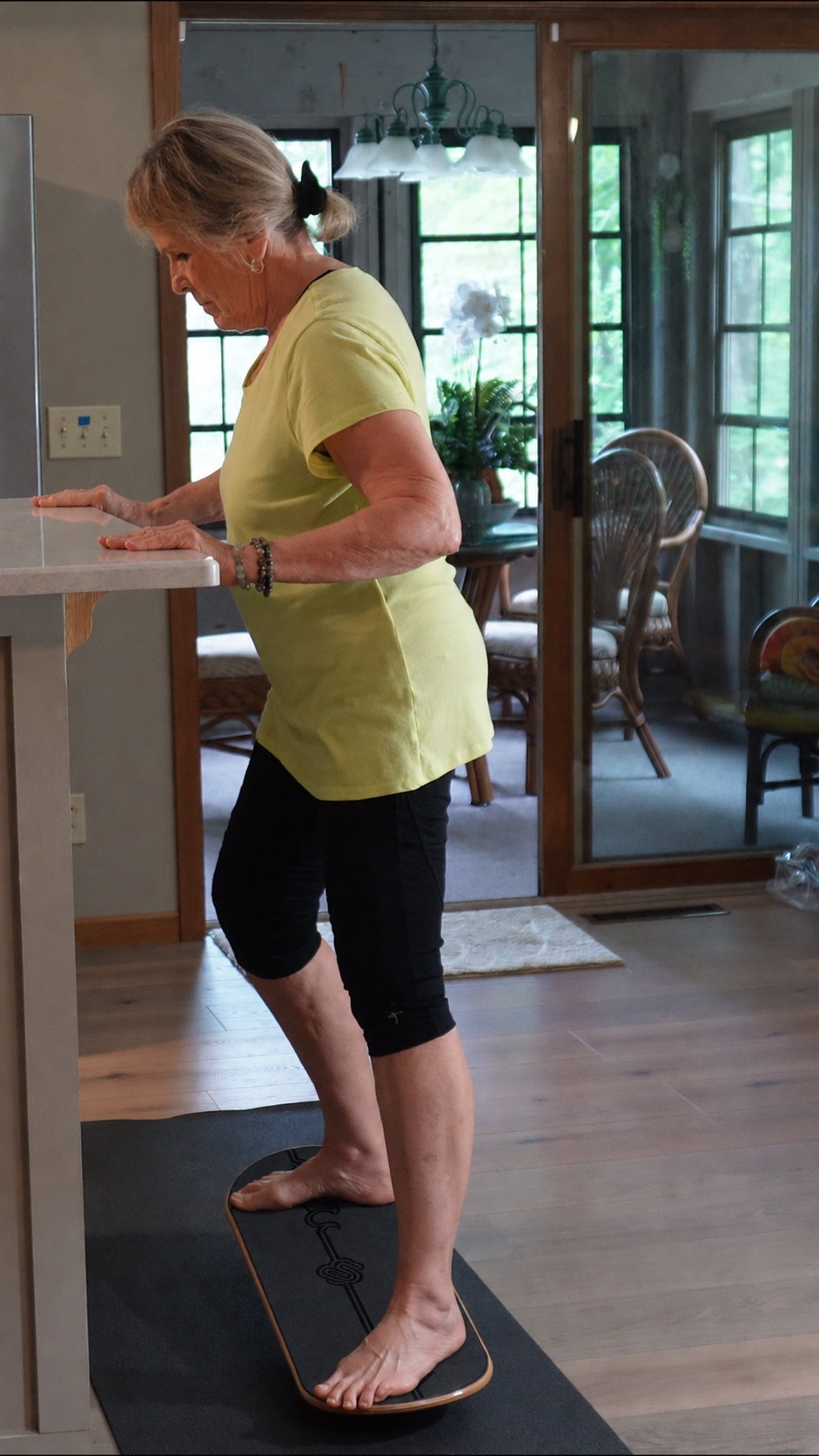
Balance exercises for adults over 40 can help you build steadier movement, better control, and confidence for the activities you love. Start with single-leg stands, heel-to-toe walking, and controlled reaches, then add balance-board movements that challenge you in more directions.
Think hiking, skiing, dancing, getting down on the floor with your kids, or staying quick on a pickleball court. Balance is part of all of it. Your 40th birthday is not an expiration date for coordination, but it is a great time to give this trainable skill a regular place in your routine.
This guide brings together 12 exercises, a simple starting routine, and ways to progress with Whirly Board. Choose your starting point by your current ability, not the number on your birthday cake.
Why balance training matters after 40
Balance brings together information from your eyes, inner ear, and the sensors in your muscles and joints. Your nervous system uses that information to coordinate the movements that keep you upright. Strength gives you the capacity to move; balance helps you control that movement.
These abilities can change with age, activity, injuries, and health. There is no universal moment when balance suddenly declines at 40, and a little wobble does not automatically mean something is wrong. The useful question is: are you regularly practicing the movements you want to keep doing?
The research supports making balance a training priority. A systematic review of balance training in healthy older adults found improvements in standing balance, balance during movement, and anticipatory and reactive balance. That evidence supports the value of training across later life; it does not establish a guaranteed timeline or a result specific to Whirly Board.
Variety matters, too. A review of balance-training specificity found that improvements were strongest in the tasks people actually practiced. That is a good reason to combine holding, stepping, reaching, and changing direction instead of measuring your entire ability by one long single-leg stand.
What are you training?
- Static balance: keeping a controlled position.
- Dynamic balance: staying balanced while you move.
- Anticipatory balance: preparing for a movement such as reaching or stepping.
- Reactive balance: responding when your position or support changes.
Your routine can develop control and body awareness while making movement more engaging. Keep walking, strength training, and doing your favorite sports alongside it.
6 balance exercises to practice at home
Use the amounts below as starting suggestions. Choose a version that lets you move deliberately, and use fingertip support when it helps you practice with control.
1. Single-leg stand
Stand tall, shift your weight onto one leg, and lift the other foot just clear of the floor. Keep your standing knee soft and your gaze on a point ahead. Hold for 10–30 seconds, then switch sides. Repeat twice.
Focus: controlled single-leg support. Progress: use less fingertip assistance or add a small arm reach before chasing a longer hold.
2. Heel-to-toe walk
Walk forward along an imaginary line, placing the heel of one foot just ahead of the toes of the other. Take 10 slow steps, turn normally, and repeat. Look ahead rather than watching every foot placement.
Focus: balance while moving through a narrow base of support. Leave a little space between your feet if a tight line feels too challenging.
3. Side-to-side weight shifts
With your feet about hip-width apart, move your weight toward your right foot, return to center, then move left. Keep your torso tall. Complete 8–10 shifts each way.
Focus: controlling how you load each leg. Progress: briefly lift the unweighted foot without leaning your upper body farther sideways.
4. Clock reaches
Stand on your right leg with a slight knee bend. Lightly tap your left toes forward, out to the left, and behind you, returning to center between taps. Repeat the sequence three times, then change legs. When standing on your left leg, reach your right foot forward, right, and back.
Focus: hip control and balance in multiple directions. Reach only as far as you can while keeping your standing knee aligned with your foot.
5. Single-leg hip hinge
Shift onto one leg and soften that knee. Tip forward from your hips as your other leg extends behind you, keeping your back long. Return to standing. Start with 5–8 slow repetitions per side.
Focus: coordinating the hip, trunk, and standing leg. A kickstand version (with your back toes lightly touching the floor) is a useful starting option.
6. Slow standing marches
Lift one knee to a comfortable height, pause for two seconds, then lower your foot gently. Alternate sides for 10–20 total repetitions. Aim for quiet landings and a steady torso.
Focus: transferring weight from one leg to the other. Make the pause smoother before lifting your knee higher.
6 balance-board exercises to build on your progress
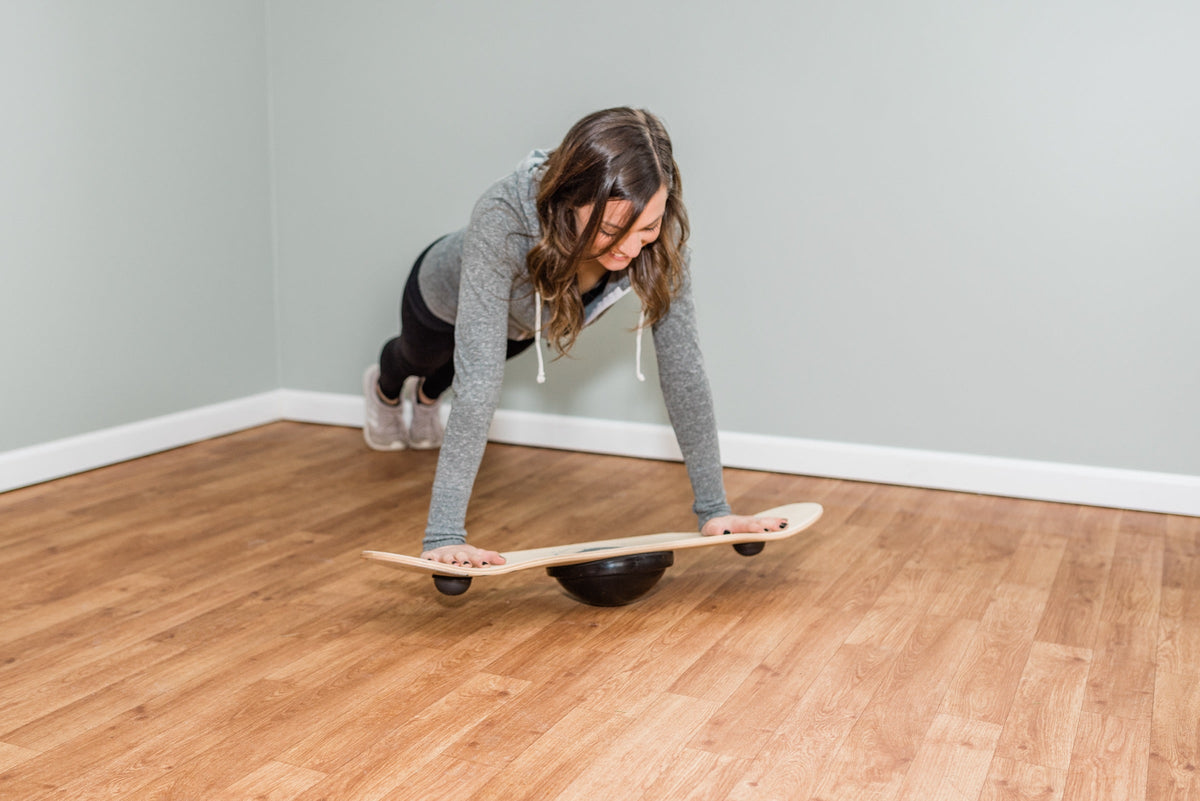
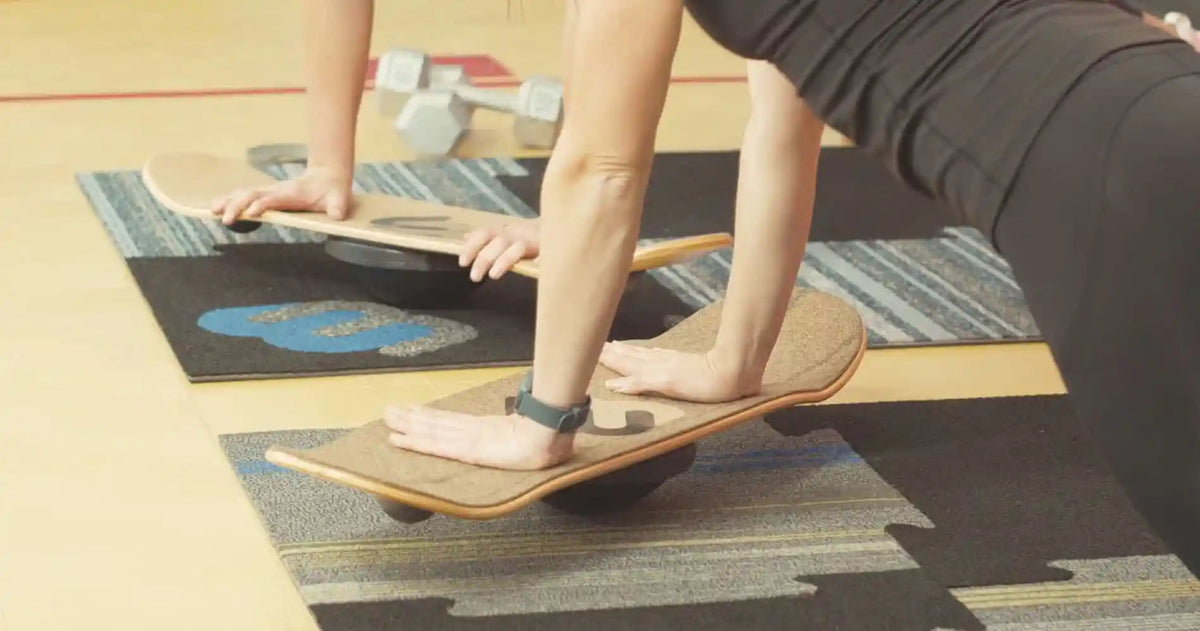
A balance board adds a moving surface to familiar movements. On Whirly Board, you can explore front-to-back and side-to-side control, diagonal shifts, and rotational movement. The end balls create additional contact points for practicing transitions and, later, walking the board.
Whirly Complete gives you several setups under one deck: the Foundation Deck, SoftStart Cushion, green MagLock3 ball, black ball, and cork Roller. Start with a setup you can control. You do not need to complete a fixed number of weeks of floor exercises before trying an appropriate board setup.

7. Two-foot balance hold
Place both feet comfortably on the deck, soften your knees, and aim for a quiet, controlled position. Try two or three holds of 15–30 seconds, stepping off between efforts.
Focus: finding your center. Small corrections are part of the exercise; you do not need perfect stillness.
8. Controlled rocking
From a two-foot stance, make small heel-to-toe movements, return to center, then explore gentle side-to-side shifts. Try 6–10 controlled movements in each available direction for your setup.
Focus: starting and stopping the board intentionally, rather than letting momentum determine the next move.
9. Diagonal weight shifts
On a cushion or ball setup you already control, slowly move your pressure toward one front corner of the deck, return to center, then explore the opposite back corner. Repeat on the other diagonal for 4–6 shifts each way.
Focus: multidirectional control. Keep the movement small enough that you can pause and return to center smoothly.
10. Mini squats
With both feet on the board, bend your hips and knees into a shallow squat, then stand tall. Start with 5–8 repetitions. Keep your knees moving in the same direction as your toes and use a comfortable range.
Focus: maintaining balance while your body rises and lowers. Develop smooth bodyweight repetitions before adding depth or load.
11. Reaches and gentle torso turns
Reach one hand forward or slightly across your body, then return. Alternate for 6–8 reaches. Once comfortable, explore a small turn of your shoulders while keeping both feet planted and the board controlled.
Focus: preparing for a change in your center of mass. Start with a modest range rather than forcing a large twist.
12. Light-resistance balance hold
Once your two-foot stance and arm movements feel comfortable, add a very light pair of dumbbells for slow biceps curls, or a light band held between your hands for short pull-aparts. Begin with 5–8 repetitions and keep the board movement controlled.
Focus: managing balance while your arms work. Choose an easier board setup when introducing resistance and increase only one challenge at a time. Keep heavier strength work on a stable surface.
For more demonstrations and progressions, explore our balance-board exercise library. End-ball transitions and walking the board can become another movement skill to explore once you are comfortable with the basics.
A simple 10-minute balance routine
Start with three sessions a week. This is a practical habit-building routine, not a clinically tested prescription or a promise that ten minutes will produce a specific result.
- Minutes 0–2: easy marching and floor weight shifts.
- Minutes 2–4: single-leg stands, alternating sides with short rests.
- Minutes 4–6: heel-to-toe walking or clock reaches.
- Minutes 6–8: two-foot board holds and gentle rocking.
- Minutes 8–10: board reaches or mini squats at your current level.
No board yet? Repeat the floor exercises in the last four minutes. Already comfortable on your board? Spend more of the session on controlled board movements and keep floor work in the mix.
The National Institute on Aging's exercise guidance recommends about three balance sessions weekly for older adults and lists activities including single-leg standing, heel-to-toe walking, and wobble-board work. Balance training belongs alongside aerobic activity and strength work.
How to improve balance after 40 and keep practicing
Make one change at a time
When a movement becomes comfortable, add repetitions, extend a hold slightly, reach a little farther, or change the board setup. Keep the other parts familiar. Advancing by the calendar is less useful than advancing when you can control the movement.
Track more than one skill
Write down a single-leg hold for each side, the quality of your clock reaches, and how smoothly you can rock and stop the board. Recheck every few weeks using the same conditions. Improvements in one task do not automatically measure every aspect of balance.
For context on interpreting a simple test, read what the 10-second balance test can tell you. Treat your own notes as progress markers, not a diagnosis or a pass/fail grade.
Put practice where it fits
Leave your board somewhere visible but out of the walkway. Pair a short session with a work break or the end of your usual workout. Our two-minute balance snacks offer another way to make movement part of your day.
Pick a reason that matters to you: stronger ski seasons, more confident hiking, or simply enjoying movement again. A routine you look forward to is easier to repeat.
Frequently asked questions
Can you improve your balance after 40?
Yes. Balance remains trainable. Practice movements that challenge your current ability, include variety, and build consistency. Your starting point, health, and training all influence your progress.
How long does it take to notice improvement?
There is no reliable universal 2–3-week deadline. You may notice a practiced movement becoming more familiar before broader changes are apparent. Track your progress over several weeks and keep building the habit over months.
Do you need a balance board?
No. Floor exercises are a useful starting point and remain valuable. A board adds movement, variety, and adjustable challenges that can make practice more engaging. Whirly Complete is an option if you want several progression choices in one system.
Which Whirly Board setup should a beginner use?
The Foundation Deck or SoftStart Cushion can offer an approachable starting point. Choose the setup that lets you control the movement, then explore the green ball and other options as your skills grow. Use our Board Finder to compare options.
Build balance for the life you want to keep living
Choose a few movements, practice them regularly, and give yourself a new challenge when they start to feel familiar. Your next hike, dance floor, or ski day is a good reason to begin.
Explore Whirly Complete for a board that grows with your practice, or browse our healthy-aging resources for more ways to keep moving.
Check with your doctor before starting a new exercise program, especially if you have unexplained dizziness, recent falls, or an injury. Practice in a clear space with suitable grip and support within reach as needed; stop if you feel pain or dizziness.