
The Whirly JournalFitness & Movement
What Is Body Awareness? How a Balance Board Helps You Practice
Learn what body awareness means, how it relates to balance, and simple ways to practice noticing your movement on and off a balance board.
By Whirly Board4 min read
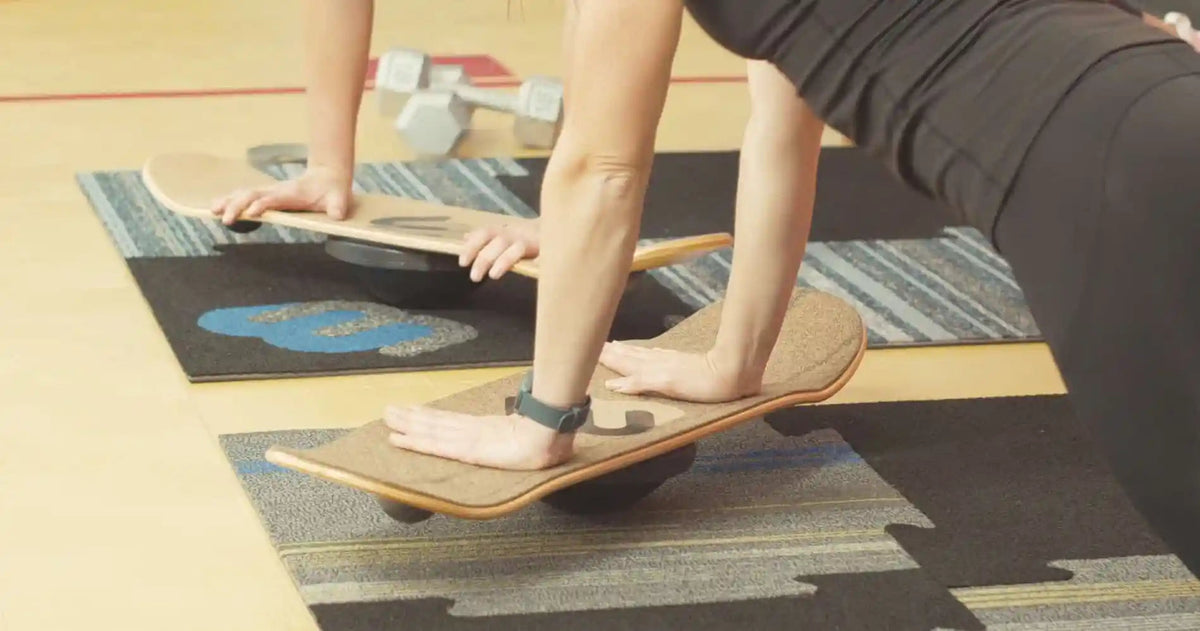
You reach for a mug without watching your hand the whole way. You step over a root on a trail. You shift your weight as a board tips beneath your feet. In each moment, you are responding to where your body is and how it is moving.
That is a useful starting point for understanding body awareness: paying attention to your position, movement, and physical sensations. A balance board gives that attention something tangible to work with. Shift too far in one direction and you feel it immediately. Make a smaller adjustment and you can explore what changes.
You do not need an athletic goal to find that interesting. Sometimes the appeal is simply having a reason to step away from a screen and pay attention to the body carrying you through the day.
What is body awareness?
Body awareness is a broad idea. In everyday movement, it includes noticing where your feet are, how you distribute your weight, and whether you are holding unnecessary tension.
One related term is proprioception, your sense of body position and movement. Balance also uses other information. The National Institute on Deafness and Other Communication Disorders explains that balance draws on signals from your eyes, inner ears, and sensors in your body.
Think about standing on a bus as it starts moving. You see the surroundings shift, sense the movement, and adjust your stance. You may barely notice those adjustments until the bus brakes unexpectedly.
Body awareness practice brings some attention to those ordinary responses. It is an opportunity to explore how you move, rather than a test of whether you are naturally graceful.
Why use a balance board for body awareness?
A changing surface gives you feedback. When a balance board tips, you can notice which direction your weight moved and experiment with a smaller correction.
It also makes an everyday action feel new. Standing on the floor is familiar enough to disappear into the background. Standing on a moving board asks you to notice what is happening under your feet.
That does not mean every wobble signals a problem. Learning an unfamiliar movement often involves wobbling. The useful question is whether the challenge lets you explore with control and step off comfortably.
If you enjoy discovering how things work, a short balance session can become a small movement puzzle: What happens when I soften my knees? Am I leaning from my hips? Can I make the next adjustment gentler?
Start with these three body awareness exercises on the floor
1. Notice your contact with the ground
Stand on a level surface near something sturdy you can hold. Look ahead and notice where you feel pressure under each foot. Is your weight farther forward, farther back, or slightly to one side? Take a few comfortable breaths without trying to force a perfect position.
2. Explore a small weight shift
With both feet on the floor, shift a little weight from one side to the other. Keep the movement small enough to control. Notice what changes at your feet, ankles, and hips. Return to a comfortable middle position.
3. Slow down a familiar movement
Reach toward a nearby object or take a few ordinary steps. Notice how your weight moves before your hand or foot reaches its destination. Choose an easy movement and give it your attention for a moment.
These are ways to notice movement. They are not diagnostic tests, and there is no score you need to achieve before moving on.
Bring that attention onto a balance board
Choose a board and setup suited to your experience, follow its instructions, and keep sturdy support within reach. Clear the surrounding space and use the recommended floor protection. Begin with the easiest configuration available to you.
Once you can mount and dismount comfortably, try a brief session with one focus:
- Pressure: Notice how pressure changes under your feet as the board moves.
- Effort: Check whether you are bracing harder than you need to.
- Control: Explore a small adjustment instead of chasing a long hold.
- Attention: Keep your eyes open and focus on the movement in front of you.
Finish before tiredness makes it harder to stay in control. Walking away with a better feel for one movement is a useful session. You can leave the record-breaking wobble marathon for another day.
How do you know you are making progress?
Notice changes in the task you are practicing. Can you get into position more comfortably? Do you recognize a big weight shift sooner? Are your corrections calmer? Can you step off deliberately?
Keep the expectations specific. A systematic review of six balance-training studies in healthy participants found that improvements were largely specific to the tasks people trained. Becoming more comfortable on a board does not automatically establish better performance in every sport or daily activity.
For more ideas to try, explore our balance board exercise library. For a broader introduction, explore our guide to balance board benefits. If you are choosing equipment for an adult beginner, our guide to choosing a balance board for seniors explains why support and the level of challenge matter.
Make room for a little curiosity
You can practice body awareness while walking, doing familiar exercise, or spending a few focused moments on a balance board. Choose a setting where you can move comfortably and notice what you are doing.
If dizziness, unexplained unsteadiness, or falls are the reason you are looking into balance practice, speak with a healthcare professional before trying an unstable surface. Those symptoms deserve individual assessment.
For everyday practice, start with one question: What do I notice when I slow this movement down? You may discover that a familiar body still has a few things to teach you.
Adapted by Whirly Board from an article submitted through our contributor program, which offered a board in exchange for an original article.