The Whirly JournalFitness & Movement
Can Music Help Your Balance? The Science Behind Moving to the Beat
Explore research on music, rhythm and balance, then try a one-song Whirly Board break that brings coordination practice into your day.
By Whirly Board2 min read
You know that song that makes you walk a little faster? Or the one that gets you moving in the kitchen before you realize you’re dancing?
Music has a way of getting into our movements. Could it help us practice balance, too?
Research suggests that music can influence balance performance, and structured movement programs set to music have improved balance in older adults. The connection gives us another reason to put on a favorite song and move.
A beat gives your body something to follow
When you walk, turn, reach, or shift your weight, your nervous system processes information and adjusts your movements. A steady beat adds a timing cue. You can anticipate it and organize a movement around it.
That idea appears in music-based exercise programs where participants walk to a rhythm, change direction, and adapt when the music changes. Following the music gives attention and coordination a job alongside the physical movement.
What researchers found
A randomized trial by Trombetti and colleagues involved 134 adults aged 65 and older who were at increased risk of falling. Participants took a weekly, hour-long music-based movement class for six months.
The exercises included walking to piano music, responding to rhythm changes, turning, and shifting weight in multiple directions. Some involved handling objects.
Compared with a group waiting to begin, participants improved balance and walking performance. They also experienced a 54% lower fall rate during the first six months. That result reflects the complete exercise program, including its instruction and progressive movement practice. It does not show that listening to music alone reduces falls by 54%. Read the trial.
The program offers an interesting model for balance practice. Participants learned to coordinate their bodies while responding to changes around them.
Does your playlist matter?
Smaller experiments have explored listening alone.
In a study of 26 women ages 50 to 55, listening to an excerpt of Mozart reduced a measure of postural sway in two of four standing conditions. The study measured immediate responses during 30-second tests, rather than lasting improvements or fewer falls. Read the study.
Another study of 24 women in the same age range compared preferred music, non-preferred music, and silence. Preferred music improved some balance measures, while non-preferred music worsened several measures. Musical preference may be part of the picture, although these small studies leave plenty to investigate. Read the study.
For your next session, a song you enjoy is a reasonable place to start. Mandatory Mozart can wait.
Try a one-song Whirly Board break
Once you’re comfortable on your board, use a song with a clear, manageable beat to give familiar movements a fresh focus.
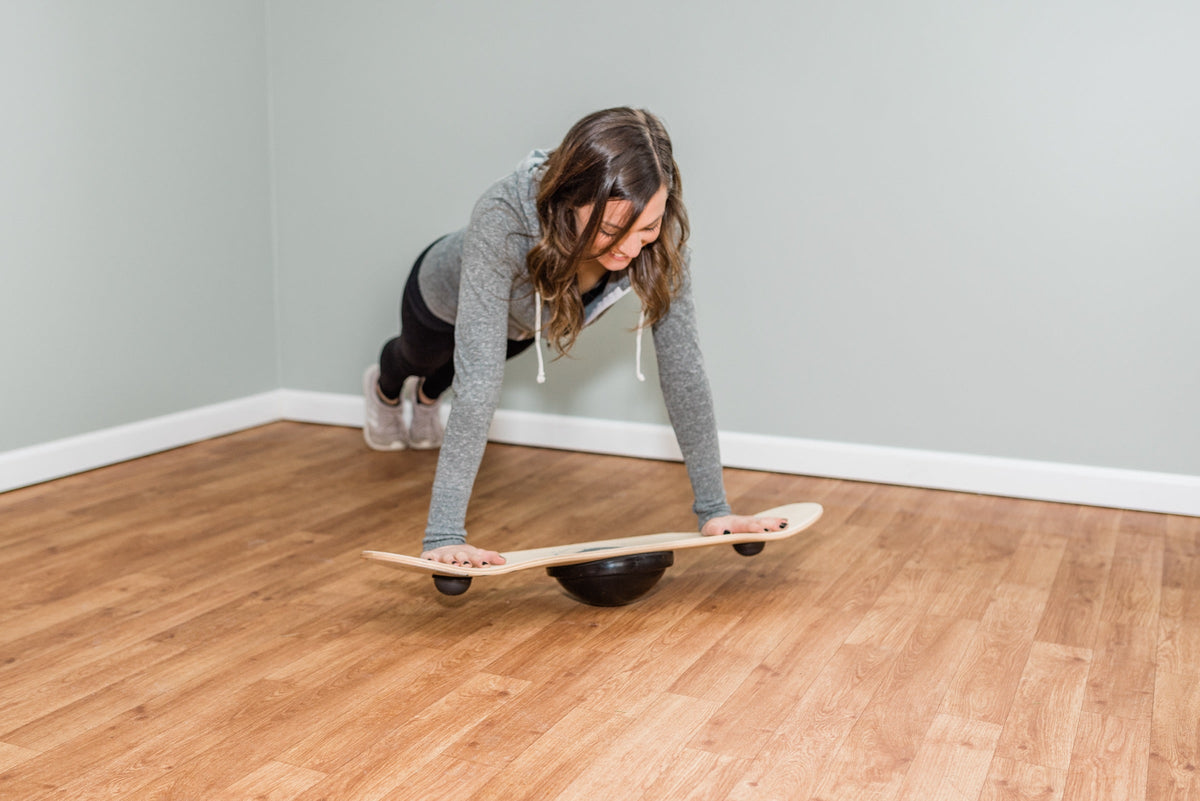
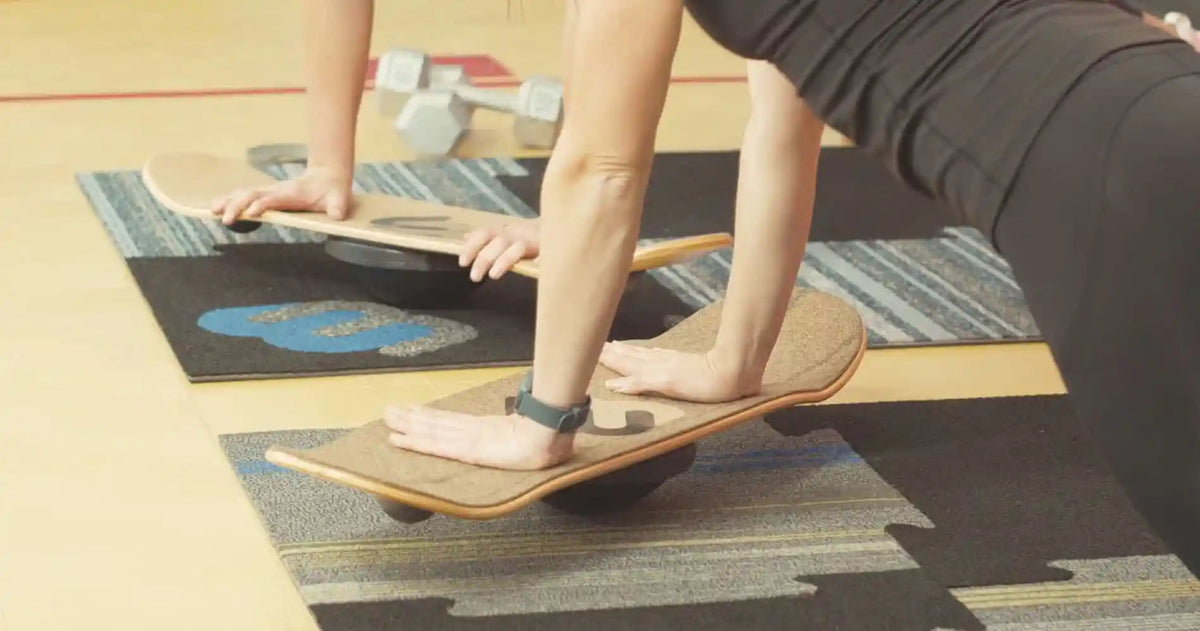
Use a familiar board setup that allows small shifts in these directions, following your model’s instructions with sturdy support within reach. Try this sequence with movements you already know.
- Begin with small, controlled side-to-side shifts.
- Take four beats to shift one way and four beats to return.
- Change to gentle forward-and-back shifts.
- Repeat a familiar sequence through the chorus.
Let your control determine the pace. Moving every second or fourth beat gives you time to make each shift deliberate.
This session is a practical idea inspired by rhythm-based movement research. It hasn’t been tested as a Whirly Board research protocol.
Make room for a little rhythm
Music gives you another way to structure practice. You can focus on matching a beat, changing direction, and repeating a movement smoothly.
Keep your board somewhere convenient, choose one song, and use it as a cue to take a movement break. Over time, build a playlist that makes you want to come back.
For more ways to notice your movements, explore our guide to body awareness. Our balance board fitness library offers demonstrations to help you choose familiar movements.
What song belongs on your movement-break playlist?
Choose movements and a board setup appropriate for your ability. If you have a condition affecting balance, ask your healthcare professional about an appropriate exercise progression.